


Rehearsing the future
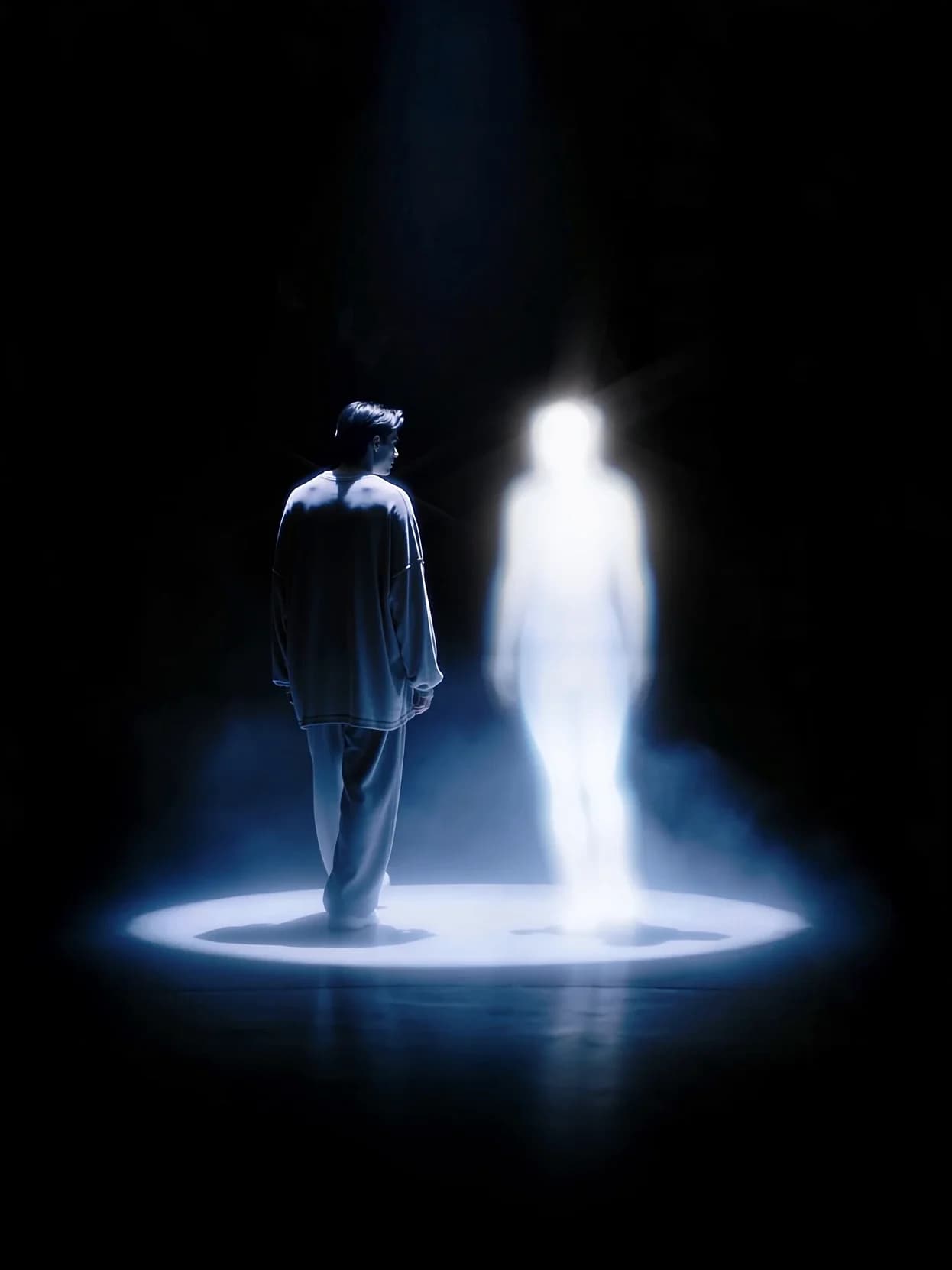
a laboratory exploring theatre and
the human being in the age of artificial intelligence
2026 • 2027

Manifesto
Neurotheatre: a rehearsal for the future — a creative laboratory of the Theatre of Nations and Sber, created to foster dialogue between theatre and AI technologies. For a long time, we dreamed that machines would take over monotonous work, leaving creativity to humans. The reality turned out to be stranger: today, with the help of neural networks, it is already possible to synthesize every element of a performance, and in the future — without a human.
To understand these processes and prepare the audience, to see how AI affects our lives and shapes our future, we are creating a platform that will collect and analyze the experience of interaction between theatre and new technologies.
Our goal is to bring together theatre professionals and experts from other fields to delve into the topic, discuss prospects, and explore new stage languages.
Neurotheater is:
1. A residency for directors, artists, playwrights, composers, and choreographers. 2. A foresight session for theatre managers from across the country. 3. A showcase of stage experiments with AI called “Neuronight”.
Residency
a research laboratory for directors, artists, playwrights, composers and choreographers — studying AI, searching for new plots and a new stage language. applications open until 11 October 2026 for residents of Russia
November 16–25, 2026
the residence is located in the New Space of the Theatre of Nations. the organizers provide accommodation and travel for the participants.
the program includes educational tracks from Sber, master classes, meetings with AI experts and representatives from various fields of science and culture, as well as team formation and the creation of performance concepts.December 1, 2026 – January 24, 2027
remote work on the idea for a future performance as a team.
January 30, 2027
pitching ideas in the “Neuronight” showcase program, to which directors and artistic directors of theaters from all over the country will be invited. one of the ideas will be implemented at the Theatre of Nations in the 2017/2018 season.
Neuro Night
a showcase of stage experiments with AI. applications open until 29 November 2026 for authors from the BRICS countries
September 7 – November 29, 2026
stage, performance, and artistic projects are accepted for participation — performances, performances, dance and musical works, installations, objects, media art, and other experimental formats created using neural networks or exploring artificial intelligence as a theme, a tool, or a participant in the artistic process.
January 30, 2027
the selected works will become part of the showcase of stage experiments with AI “Neuronight,” alongside ideas born in the residency.
the projects participating in “Neuronight” will be presented in the program in the form of selected objects or demonstration materials, at the discretion of the curators. the organizers provide travel and accommodation for the participants.
- Yuri Kvyatkovsky. director and curator. A graduate of the Moscow Art Theatre School (2003) and a student of Dmitry Brusnikin and Roman Kozak. He worked in the company of the Mossovet Theatre and appeared in productions at the Pushkin Theatre
- Mikhail Degtyarev. director and curator. A playwright and screenwriter working in the field of new forms of drama: documentary theatre, performances, contemporary dance, opera, immersive and site‑specific experiences. Creates narratives at the intersection of theatre, digital interfaces, ritual and contemporary art.
Curators

With the GigaChat team we have put together a library of prompts to help you shape ideas for the residency and for your own work
Manifesto
The age of intelligent machines is beginning, and — as we like it in the theatre — it begins with a conflict. For a long time we thought machines would take over the heavy, monotonous work while we kept the best part for ourselves: free time and creativity. Reality has turned out stranger. Among the first things neural networks changed was the world of cultural production. Already today every element of a performance can be synthesised. In prospect, without human involvement at all.
At the same time it is plain that AI has become indispensable across the most varied spheres of life. Its positive influence is beyond dispute. Virtual assistants, creative tools, robotics, the use of AI in industry, healthcare, transport and education all bring substantial results. An awareness of AI's role in the life of the present-day human being and in the future — together with the eternal, inescapable conflict inside this theme — is superb material for theatre.
We called our laboratory «Neurotheater: rehearsing the future» because rehearsal is theatre's method of investigating reality. Theatre advances hypotheses and studies the world through action and the word. Knowledge is born in the rehearsal room, is tested by an audience, and becomes part of culture.
Artificial intelligence is already changing how text, image, music and video are made. More than that — AI is changing the human being, the spectator included. Within a few years theatre will be working with a different audience. That spectator will talk to models, generate images, see synthetic faces and hear artificial voices every day. The mere presence of AI on stage is quickly ceasing to be an event. Far more important is to understand how the human being changes alongside it. So the central subject of the laboratory's research is the human being in the age of intelligent algorithms.
The age of AI has only begun, yet one thing is already clear: tools change faster than curricula. Professions are shifting shape. Knowledge manages to grow old while it is still being absorbed. What gains value is the ability to begin again.
In most professions the state of being a beginner is considered temporary. In theatre it is built into the very method of the work. Every production starts at the moment when the keys to it are still to be found. Even the most experienced actor comes to the first rehearsal without a ready answer. Rehearsal turns the beginner's state into a professional method: to try, to err, to change the decision, to start again and keep moving.
That is why theatre can pose one more essential question: how are we to live and act in a world where the ground we are used to keeps shifting?
Fear, bewilderment, exhilaration, the loss of professional certainty become material for the laboratory just as much as a digital twin, a generative text or an algorithmic character.
In our rehearsal room we are looking for a language in which theatre can speak about AI, with AI, against AI — through the body, space, time and the presence of an audience. We rehearse the future while the future rehearses us. And we ask ourselves:
What does neural-network technology change in the relations between people on stage?
Can artificial intelligence become a true medium for theatre — an environment that gives rise to its own language, its own forms of presence and its own ways of meeting the audience?
Can the aesthetics of generation — variability, probability, the absence of a final version — become such a language? And what other aesthetics might neural networks propose?
Which ethical, social and other conflicts around AI could become the material of new plays — what singular utopias and dystopias, plots and worlds is our time able to offer?
Who becomes the author of the stage if the machine proposes the material, the playwright chooses, the director assembles and the actor embodies?
What happens to the depth of theatre work when generation accelerates every stage of production?
Is a machine capable of improvising, or is its freedom born only in the eyes of the spectator?
What happens to live presence on stage when a digital twin, a robot, an algorithm appears beside the actor?
Theatre grew out of ritual. Can artificial intelligence give rise to a new rituality, a new processuality — the performance as a continuous process that changes together with the audience, the space and the time? If so, what will it be like?
What can theatre give to algorithms, and to the people of the age of intelligent machines?
Who gets the final line — the human or the machine?